 Exclusives


 Wooden spas

 Nordic baths



 Wooden saunas
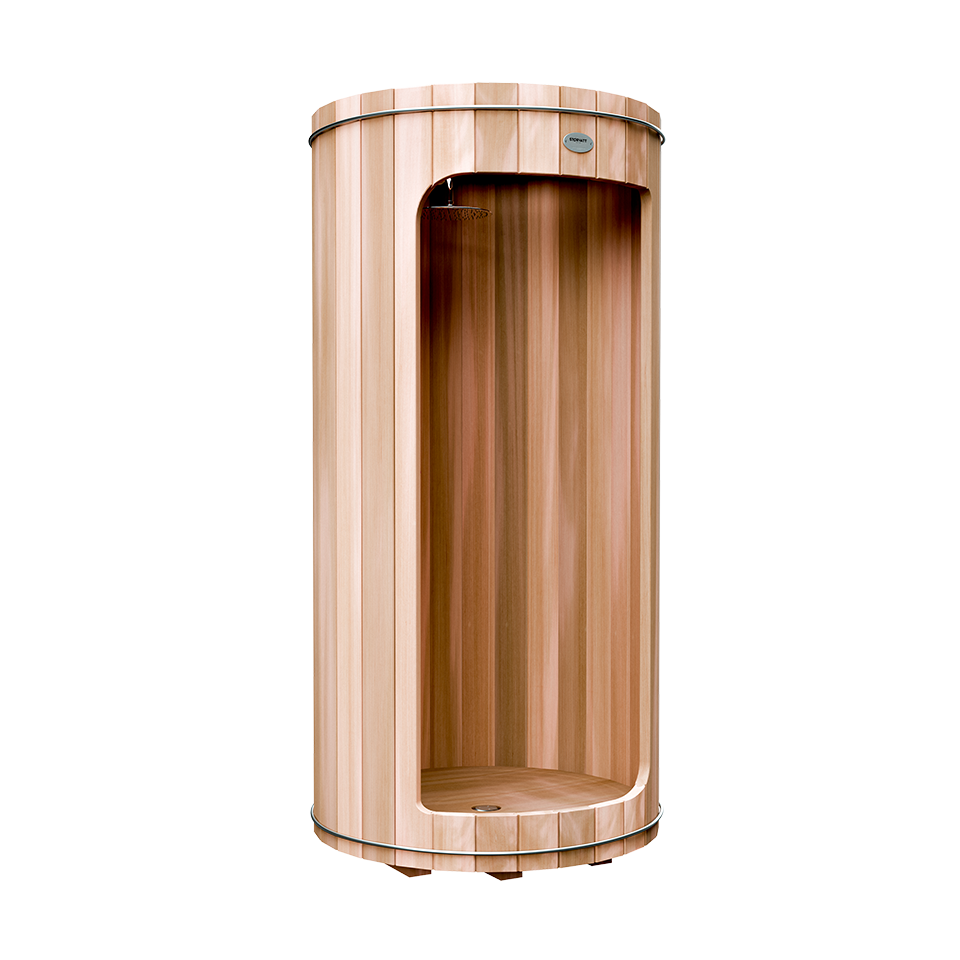 Douche en bois
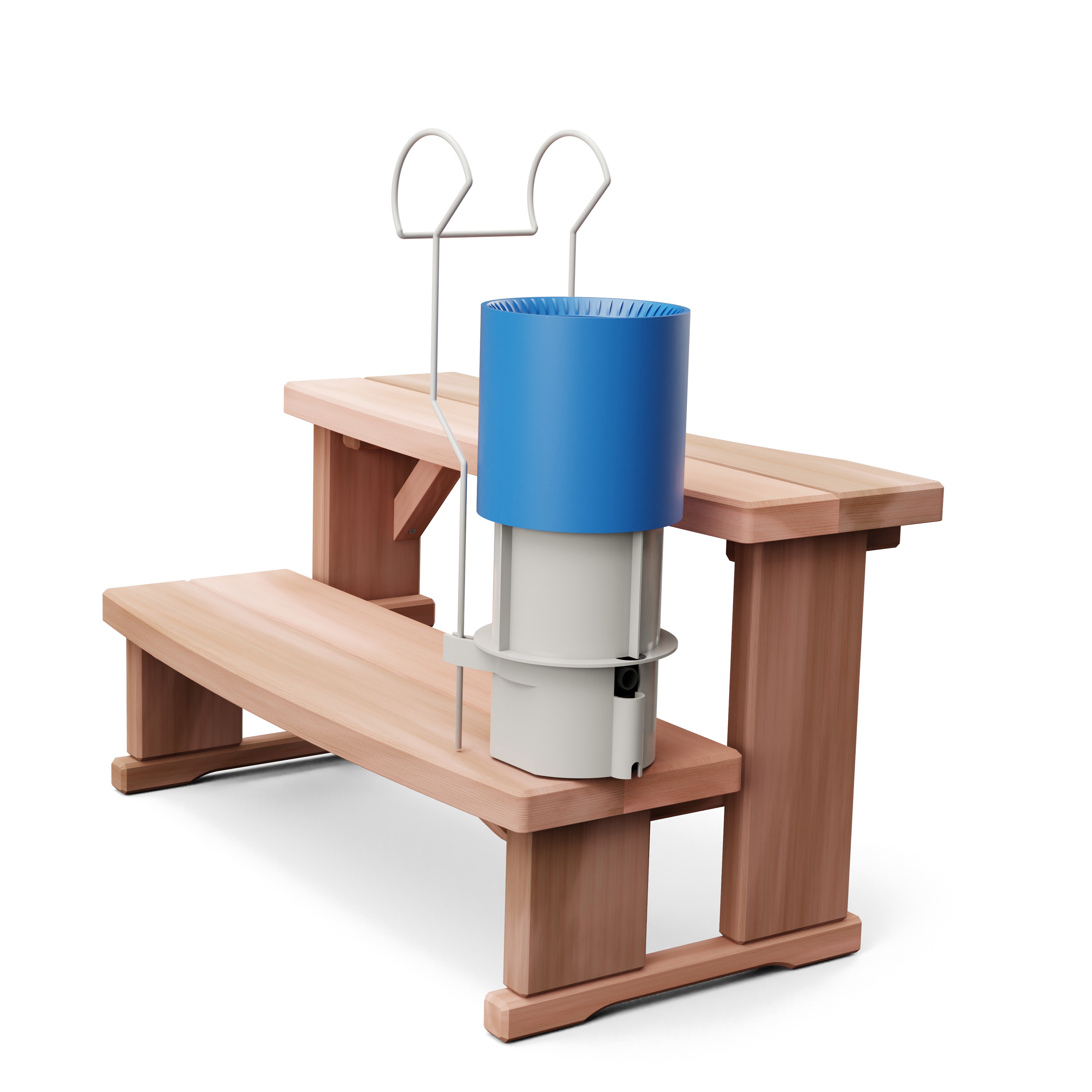 Accessories
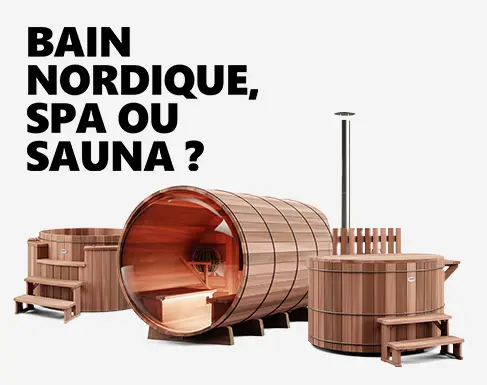
Traditional sauna or infrared sauna? The first heats the ambient air to very high temperatures, the second sends infrared rays that directly warm your body at a much gentler temperature. This choice is not trivial: it influences your experience, your budget, the space needed and even the benefits you will get from it.
Traditional sauna vs infrared: the fundamental differences
How does a traditional sauna work?
The traditional sauna, also called Finnish sauna, is based on a simple principle: a stove heats volcanic stones, which in turn heat the cabin air until it reaches 80 to 100°C. The humidity remains intentionally low (10 to 20%), which allows you to withstand these high temperatures without suffocating.
The central element of the Finnish experience is the löyly: water is poured over the hot stones, creating a cloud of steam that temporarily intensifies the sensation of heat. It is this ritual, inherited from several centuries of Scandinavian practice, that gives the traditional sauna its immersive and intense character.
How does an infrared sauna work?
The infrared sauna operates on a radically different principle. Emitting panels diffuse infrared rays that do not heat the ambient air, but penetrate directly into the skin and tissues. Result: the sauna temperature remains low, usually between 40 and 60°C, while the body itself experiences a deep and progressive heat.
Summary comparison table
Criterion | Traditional sauna | Infrared sauna |
|---|---|---|
Temperature | 80–100°C | 40–60°C |
Heating mode | Ambient air (convection) | Direct radiation (body) |
Humidity | Low (10–20%), adjustable with löyly | Very low, no steam |
Preheating time | 30–45 min | 10–15 min |
Electrical consumption | High (powerful stove, 6–9 kW) | Moderate (panels 1.5–3 kW) |
Sensation | Intense and enveloping heat | Gentle and penetrating heat |
Space required | Cabin generally larger | Compact cabin, apartment format possible |
Scientific background | Very important (Finnish studies) | More recent, less comprehensive |

Traditional or infrared sauna: what health benefits?
The benefits of traditional sauna
The Finnish sauna benefits from the most solid scientific evidence. Regular use (4 to 7 sessions per week) is associated with:
a significant reduction in cardiovascular risks, comparable to that obtained by moderate physical activity
a deep muscle relaxation, thanks to the intense heat that dilates blood vessels
a marked circulatory stimulation, the body having to manage significant thermal stress
documented positive effects on stress and sleep quality
The intensity of the heat, although sometimes impressive for the uninitiated, is precisely what generates these measurable physiological effects.
The benefits of infrared sauna
The infrared sauna relies on a different principle: gentler heat, but one that penetrates more deeply into the tissues from the first few minutes. The reported benefits include:
effective muscle recovery after exertion, thanks to the heat acting directly on muscle fibers
accessible relaxation for people who cannot tolerate high heat (mild heart conditions, elderly people, pregnant women subject to medical advice)
reported positive effects on skin and microcirculation
perspiration that starts more quickly despite the lower air temperature
What does the science really say? A nuance to know
It is important to be honest on this point: while the traditional sauna benefits from robust and large-scale studies, research on infrared sauna remains more recent and less numerous. This difference fuels an ongoing debate in user communities, where some practitioners believe that only the traditional sauna produces a true "thermal stress" sufficient to generate cardiovascular benefits comparable to those measured in Finnish studies.
Which sauna to choose according to your profile?
The right choice depends above all on your situation and priorities. Here are some concrete guidelines:
You have limited space or budget → the infrared sauna is generally more suitable: compact format, simplified installation, controlled electrical consumption.
You are looking for the authentic Scandinavian experience, with löyly and intense heat → the traditional sauna naturally imposes itself, it is the reference experience.
You practice intense sport and seek muscle recovery → both options work well. The traditional acts by overall vasodilation, infrared by targeted tissue penetration. The choice here depends more on your heat tolerance than on pure effectiveness.
Find the sauna that suits you
A wooden sauna project, a question about models or installation? Our team is happy to help and welcomes you at our Megève showroom.
Traditional or infrared sauna: your questions
Answers to the most frequently asked questions before choosing between the two types of sauna.
Which one is best for weight loss?
Neither one directly "melts fat," the weight loss observed after a session is essentially water lost through perspiration, which is quickly compensated for by hydration. Both types of sauna can, however, accompany an overall approach to wellness and sports recovery.
What is the lifespan of an infrared sauna vs traditional sauna?
A well-maintained traditional sauna (wood, heater, stones) can last several decades with regular maintenance. An infrared sauna's lifespan is generally tied to that of its emitter panels, often warranted for 5 to 10 years, replaceable individually without changing the entire cabin.
Is traditional sauna more effective than infrared in terms of cardiovascular health?
On this specific criterion, yes: traditional sauna benefits from significantly more scientific evidence, with large-scale studies demonstrating measurable reduction in cardiovascular risks over several decades of follow-up. The high temperature and intense thermal stress it generates appear to play a key role in these effects, a mechanism less documented with infrared to date.
Why does the traditional sauna remain the reference for experienced enthusiasts?
Beyond the health benefits, the traditional sauna or outdoor wooden sauna offers a more complete and customizable experience thanks to löyly: it is possible to adjust the intensity of heat and humidity as desired, session after session, to reproduce the sensations sought by the most demanding practitioners. It is also the practice that comes closest to the original Scandinavian ritual, with its strong historical and cultural roots. An aspect that infrared, a more recent technology, does not seek to replicate