 Exclusives


 Wooden spas

 Nordic baths



 Wooden saunas
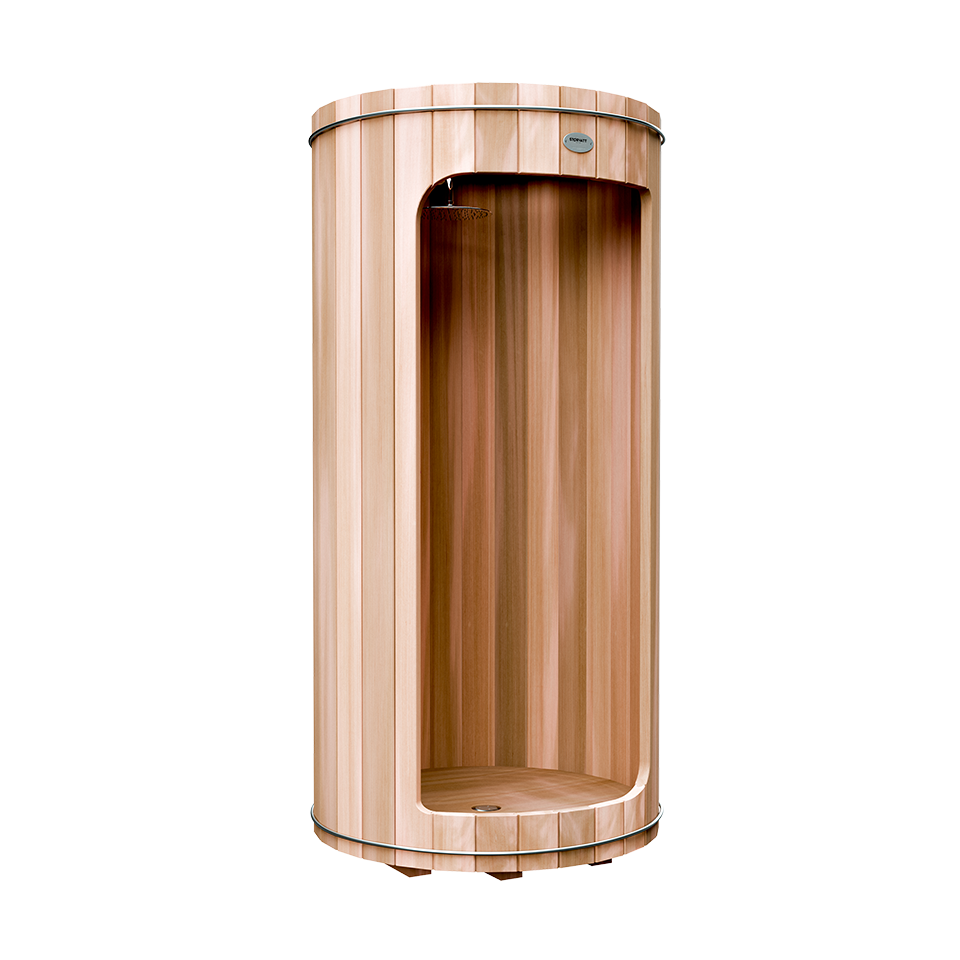 Douche en bois
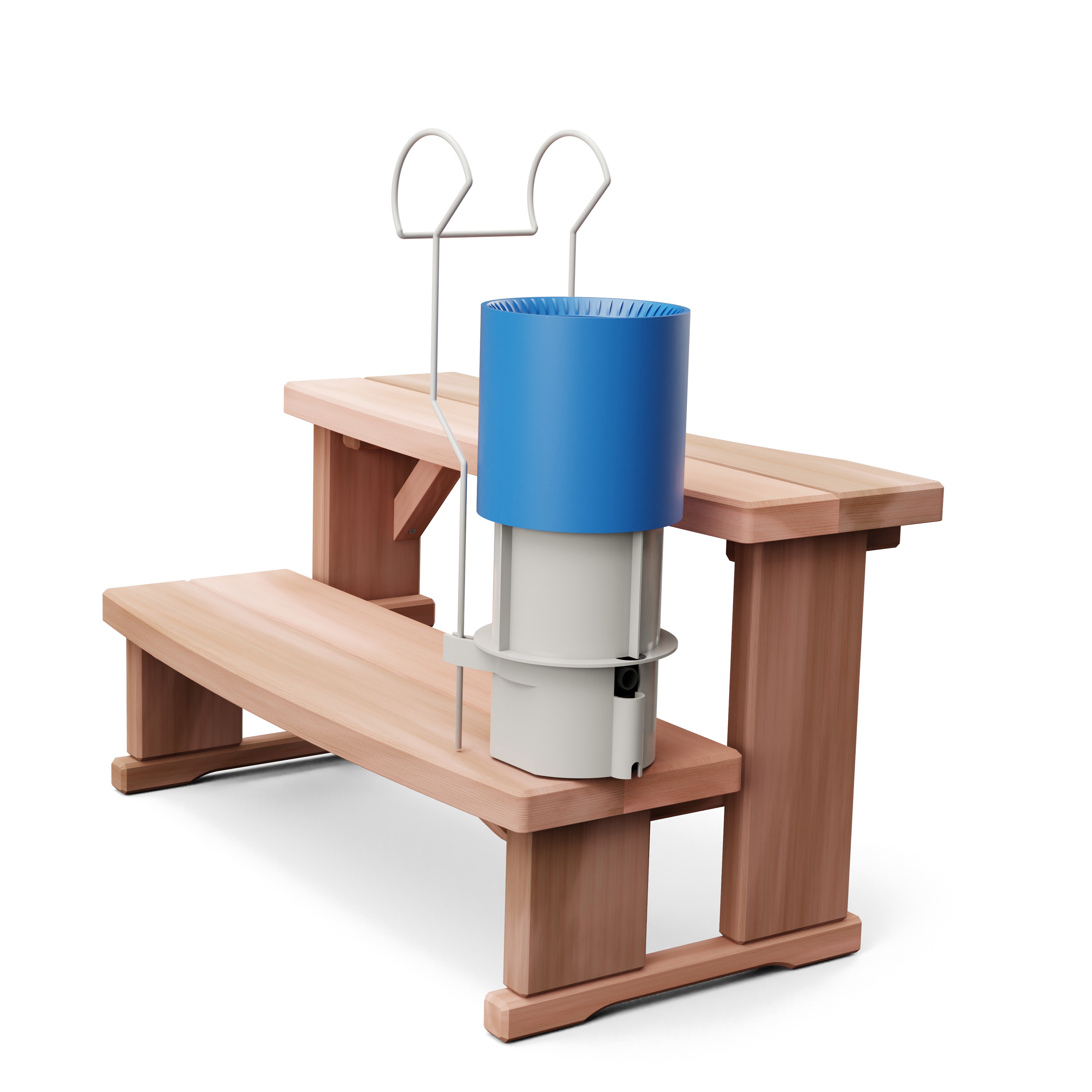 Accessories
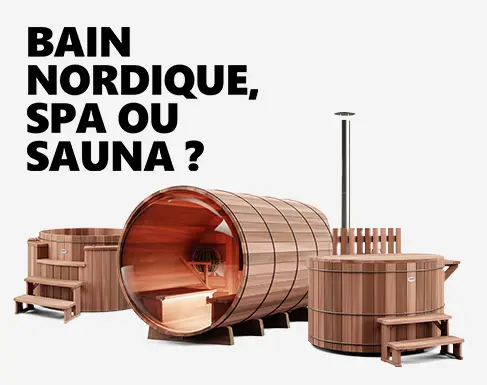
Hot tub or pool: two pieces of equipment, two philosophies
Before going into the details, one point often source of confusion must be clarified: Jacuzzi is a registered trademark, not a generic term. You should say hot tub (or hot tub, or jet bath). Confusion with the Nordic bath is also frequent: the latter is a heated basin without jet massage, of Scandinavian origin.
In summary:
The hot tub is a compact basin (1 to 3 m³), heated permanently, equipped with jet massage. It is designed for relaxation, muscle recovery and well-being. It can be used all year round, including in winter.
The pool is a large basin (30 to 80 m³ on average), not heated by default, designed for swimming, sport and leisure. It is mainly used from April to September in France.
These are not two variants of the same product. They are two pieces of equipment with different philosophies: the hot tub is a tool for daily well-being, the pool is a space for seasonal leisure.
Available land: the first criterion to look at
This is often the criterion that settles the debate before even mentioning the budget.
The pool: you need space
A standard in-ground pool measures on average 8 x 4 meters with a depth of 1.20 m to 1.50 m. You must add the deck (around the basin), the technical room and regulatory clearances: most Local Urban Planning Plans (PLU) impose a minimum setback of 3 meters from property lines. An entry-level shell pool is about 4.5 x 2.5 m, or a total footprint on your land of at least 40 m².
An above-ground pool is more flexible in terms of space, but it is still bulky and requires level ground.
The hot tub: compact by nature
A standard 4-person hot tub measures approximately 2.2 x 2.2 meters. It can fit on a terrace or in a corner of a garden, provided the surface is flat and solid. Important point often overlooked: a full hot tub weighs between 1,500 and 2,500 kg (water + shell + occupants). If you install it on a wooden or concrete terrace, have the load capacity verified by a professional first. A reinforced concrete slab is often necessary.

Usage: for what and for whom?
The hot tub is for you if...
You are looking to relax after sports or a long work day
You have muscle or joint pain (jet massages have a documented therapeutic effect)
You want to enjoy the water all year round, including in winter
You are a couple or in a small group (3 to 6 people maximum)
You have limited space
The pool is for you if...
You have children who want to play, jump, swim
You often entertain large groups in summer
You enjoy swimming or aqua aerobics
You have a large garden and want to add value to your real estate
The little-known advantage of the hot tub: four-season use
This is the point that comparisons most often forget. In France, an unheated outdoor pool is really usable for about 5 to 6 months per year (May to September). The rest of the time, it is closed, winterized, and continues to cost in taxes and maintenance without providing anything in return.
A hot tub, on the other hand, can be used 365 days a year. Soaking in a hot tub at 38 °C under the snow is one of the most appreciated experiences of its users. Given an investment cost often 2 to 3 times lower than that of an in-ground pool, the usage/investment ratio of a hot tub is often much better than it appears.
Budget: at purchase, installation and over time
Purchase price
Equipment | Entry-level | Mid-range | High-end |
|---|---|---|---|
Inflatable hot tub | 300 – 1,500 € | — | — |
Rigid above-ground hot tub | 2,000 – 5,000 € | 5,000 – 13,000 € | 15,000 – 20,000 € + |
Above-ground pool | 500 – 3,000 € | 5,000 – 12,000 € | — |
In-ground shell pool | — | 15,000 – 25,000 € | — |
In-ground concrete pool | — | 25,000 – 40,000 € | 50,000 – 70,000 € |
Swim spa | — | 12,000 – 30,000 € | 40,000 – 65,000 € |
Be careful with inflatable hot tubs: attractive because of their price, they have a lifespan of only 1 to 3 years. If you want durable equipment, prefer a wooden hot tub.
Installation costs not to forget
For a rigid hot tub, plan for:
A reinforced concrete slab: 500 to 1,500 €
A dedicated electrical connection (the hot tub requires a 32A outlet or three-phase power) : 300 to 800 €
For an in-ground pool, ancillary work is much more extensive:
Earthwork: 2,000 to 8,000 € depending on soil type
Technical room, coping, deck, safety fence: 3,000 to 10,000 € additional
Mandatory anti-drowning safety device (see next section): 1,000 to 3,000 €
Administrative procedures: what you must do before installing
This point is often neglected, because undeclared construction can result in a fine and complications when reselling. According to Service-Public.fr, here are the rules in force:
For a pool:
Basin ≤ 10 m²: no formalities required (outside protected areas)
Basin between 10 and 100 m² (almost all family pools): prior notification of work mandatory before construction begins (Cerfa form no. 13703)
Basin > 100 m² or shelter > 1.80 m high: building permit required
Above-ground pool left in place more than 3 months per year and > 10 m²: prior notification required
For a hot tub:
A hot tub smaller than 10 m² (the vast majority of models) is exempt from any administrative formalities, except in protected areas.
If you install a shelter over 1.80 m high above the hot tub, prior notification of work becomes mandatory.
Important: always check your municipality's PLU (Local Urban Planning Plan) before filing your application. It may impose specific setback or material rules that apply even when no declaration is required.
Maintenance: the criterion that often tips the decision
Hot tub maintenance
The reduced water volume of a hot tub (1 to 1.5 m³) has a disadvantage: the water becomes contaminated much faster. This requires more regular monitoring than for a pool.
pH and disinfectant level check: 2 to 3 times a week
Filter cleaning and rinsing: every 2 weeks
Complete basin drain and cleaning: every 3 to 4 months
Annual professional inspection: recommended
Plan for 15 to 35 minutes per week of water maintenance.
Pool maintenance
The large volume dilutes impurities better, but imposes other constraints:
Water monitoring and adjustment: 1 to 2 times per week in season
Basin cleaning (robot or manual): weekly
Winterization at end of season: essential (1 to 3 hours of work or 150 to 300 € with a professional)
Spring start-up: 200 to 400 € if you hire a pool specialist
Plan for 1 to 3 hours per week during peak season.
Hot tub | Pool | |
|---|---|---|
Treatment frequency | 3x/week | 1-2x/week in season |
Weekly time | ~20 min | 1 to 3 h |
Annual product budget | 200 – 500 € | 200 – 400 € |
Major constraint | Drain every 3 months | Winterization + spring start-up |
Impact on your real estate asset
This is a point many neglect when making the decision.
An in-ground pool increases the value of your property at resale. The presence of a pool increases the average price of a home by +16.3 %, and up to +19.5 % for single-family homes. In sunny regions of the South, this increase can reach 20 %. For a home valued at 350,000 €, this represents more than 68,000 € in added value.
This appreciation has a tax cost, however: you must declare your pool within 90 days of the end of work, which results in an increase in your property tax (200 to 300 € per year on average).
Whether it is a built-in hot tub or a wooden above-ground hot tub, the hot tub is not subject to any tax if it measures less than 10 m². It does not add significant value at resale, but it also does not increase the tax burden on the property.
Summary table: hot tub or pool depending on your profile
Criterion | Hot tub | In-ground pool |
|---|---|---|
Minimum land | Terrace of a few m² | About 40 m² |
Purchase budget | From 4,000 € (quality) | From 15,000 € |
Average annual cost | 800 – 2,350 € | 600 – 950 € (self-sufficient) |
Season of use | All year (12 months) | Spring-summer (5-6 months) |
Primary use | Relaxation, unwinding, recovery | Leisure, sport, socializing |
Maintenance | Regular but quick | Heavier in season |
Admin procedures | None (< 10 m²) | Declaration or permit |
Tax impact | None (< 10 m²) | Increased property tax |
Resale added value | Low | +16 to +19 % on average |
Ideal for | Couples, small gardens, well-being | Families, large gardens, summer |
A wooden spa project?
Our team helps you choose the model suited to your land and your wishes. You can also discover our spas at our Megève showroom.
Spa or pool: your frequently asked questions
Answers to the questions we are most often asked before choosing between a spa and a pool.
Hot tub or swimming pool: which consumes more energy?
In practice, the comparison is less straightforward than it appears. A hot tub consumes more energy per cubic meter of water (because it maintains the water at a constant temperature), but its volume is 20 to 50 times smaller than a swimming pool. An unheated swimming pool can cost 250 to 400 € in electricity per year (filtration only). A quality hot tub costs 600 to 1,850 €, but can be used year-round.
Can you install a spa without a declaration?
Yes, in the vast majority of cases. A spa of less than 10 m² is exempt from all administrative formalities outside protected areas.
What is the difference between a spa and a jacuzzi?
Jacuzzi is an American registered trademark that has become a generic term through common misuse. "Spa" is the correct term for a heated basin with massaging jets. All jacuzzis are spas, but not all spas are Jacuzzis.
What is a swim spa?
A swim spa is a compact basin (3 to 5 m) equipped with a powerful water current that allows you to swim in place. Some models also include massage jets.
Can you use a spa in winter?
Yes, it's even one of the great advantages of a spa. With a good insulating cover, the spa maintains its temperature without excessive energy consumption, and the winter experience (outdoor use in cold weather) is highly appreciated.