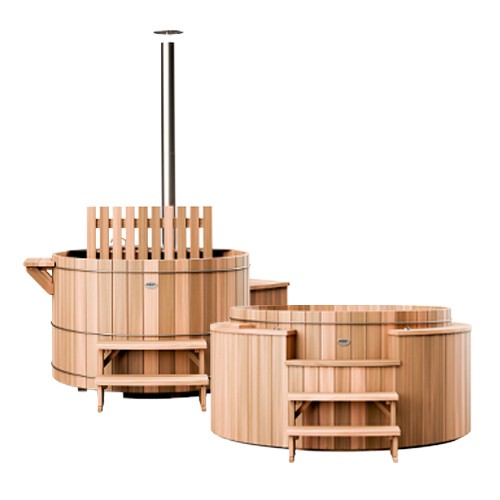
 Exclusives


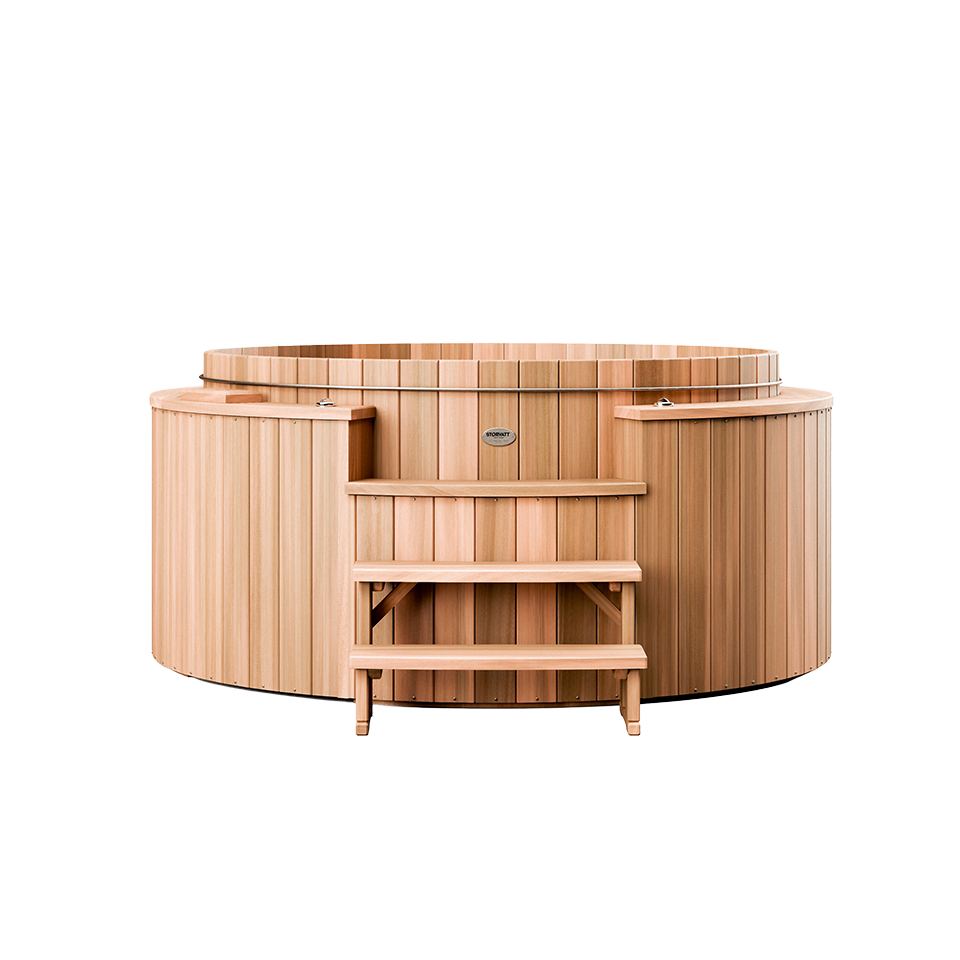 Wooden spas

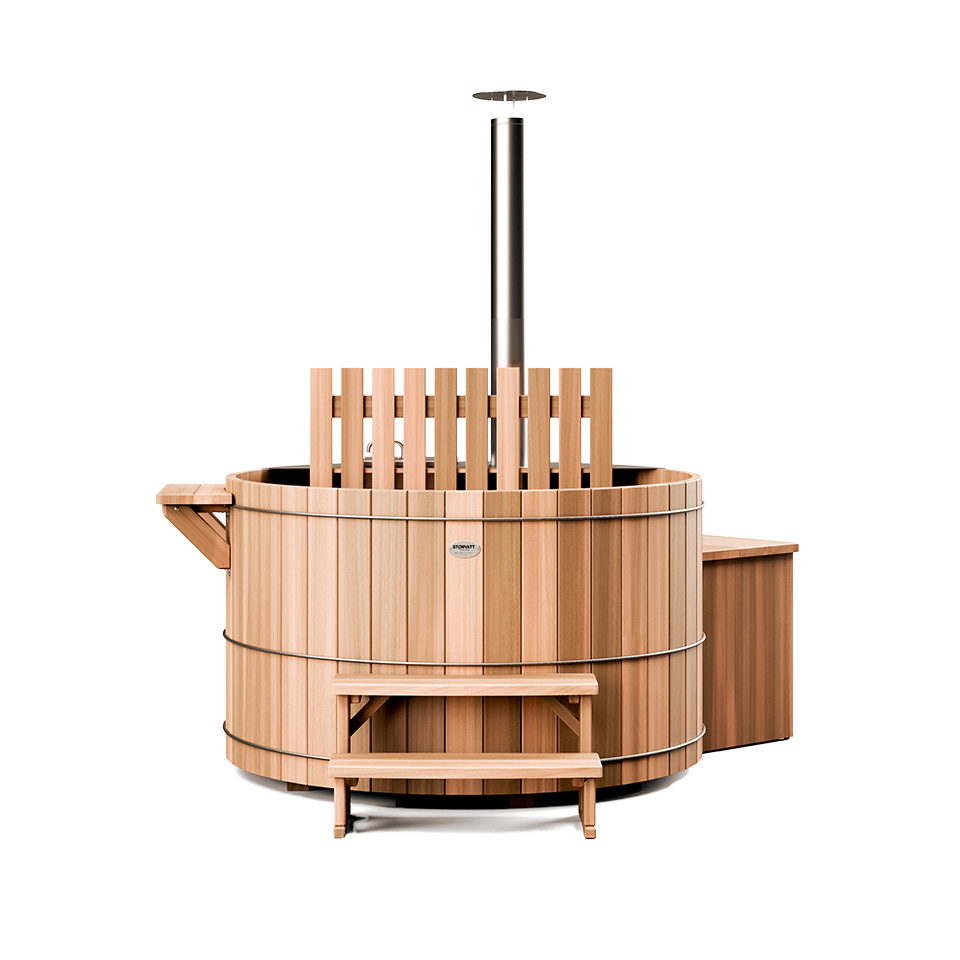 Nordic baths



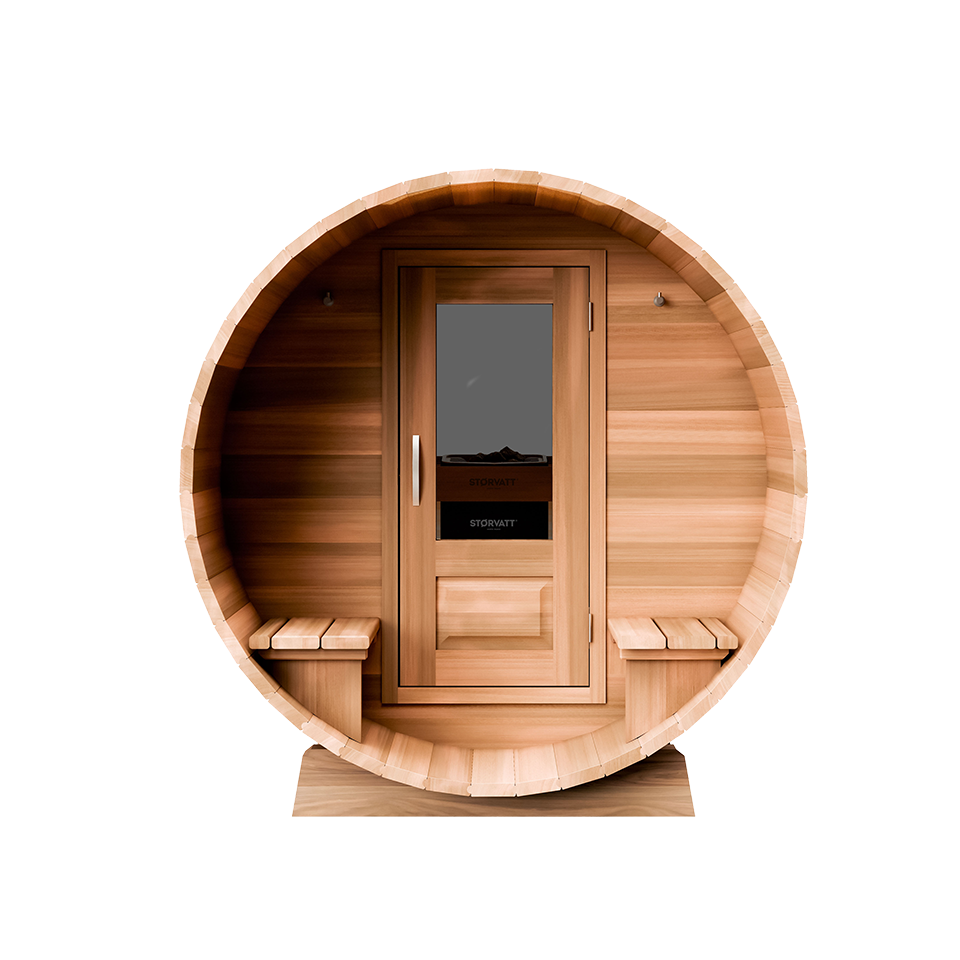 Wooden saunas
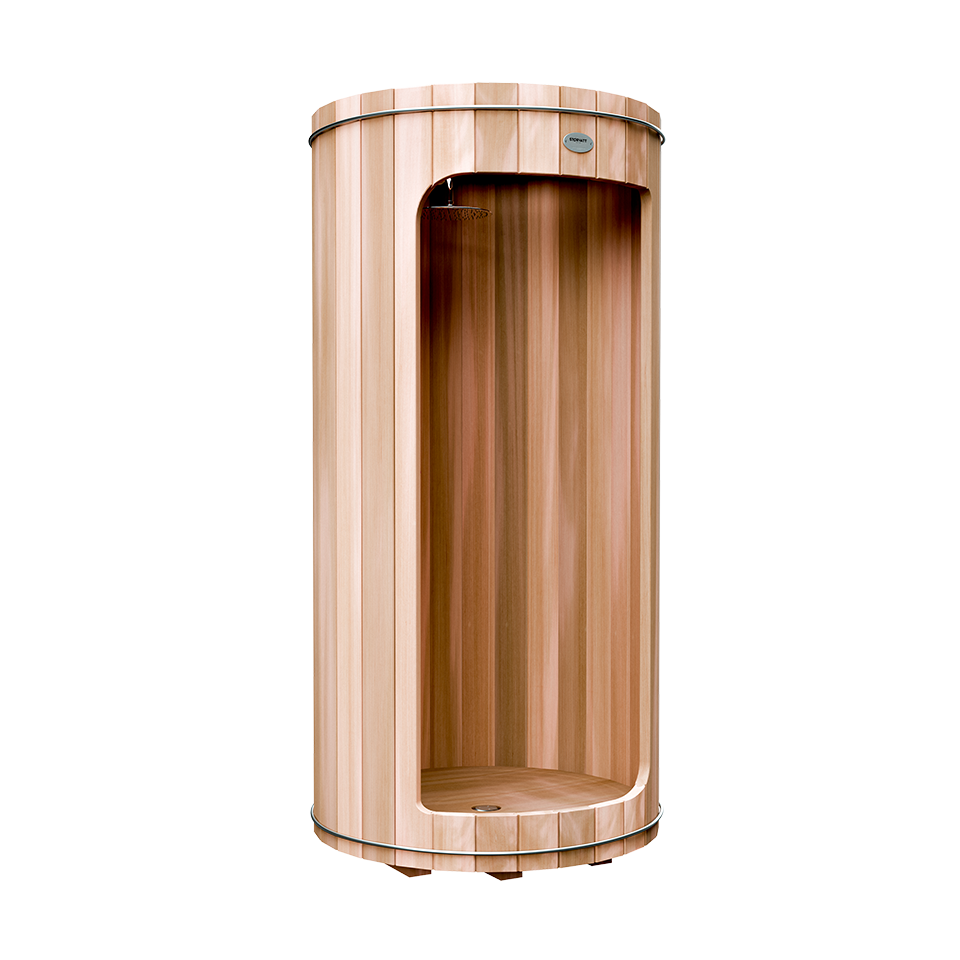 Douche en bois
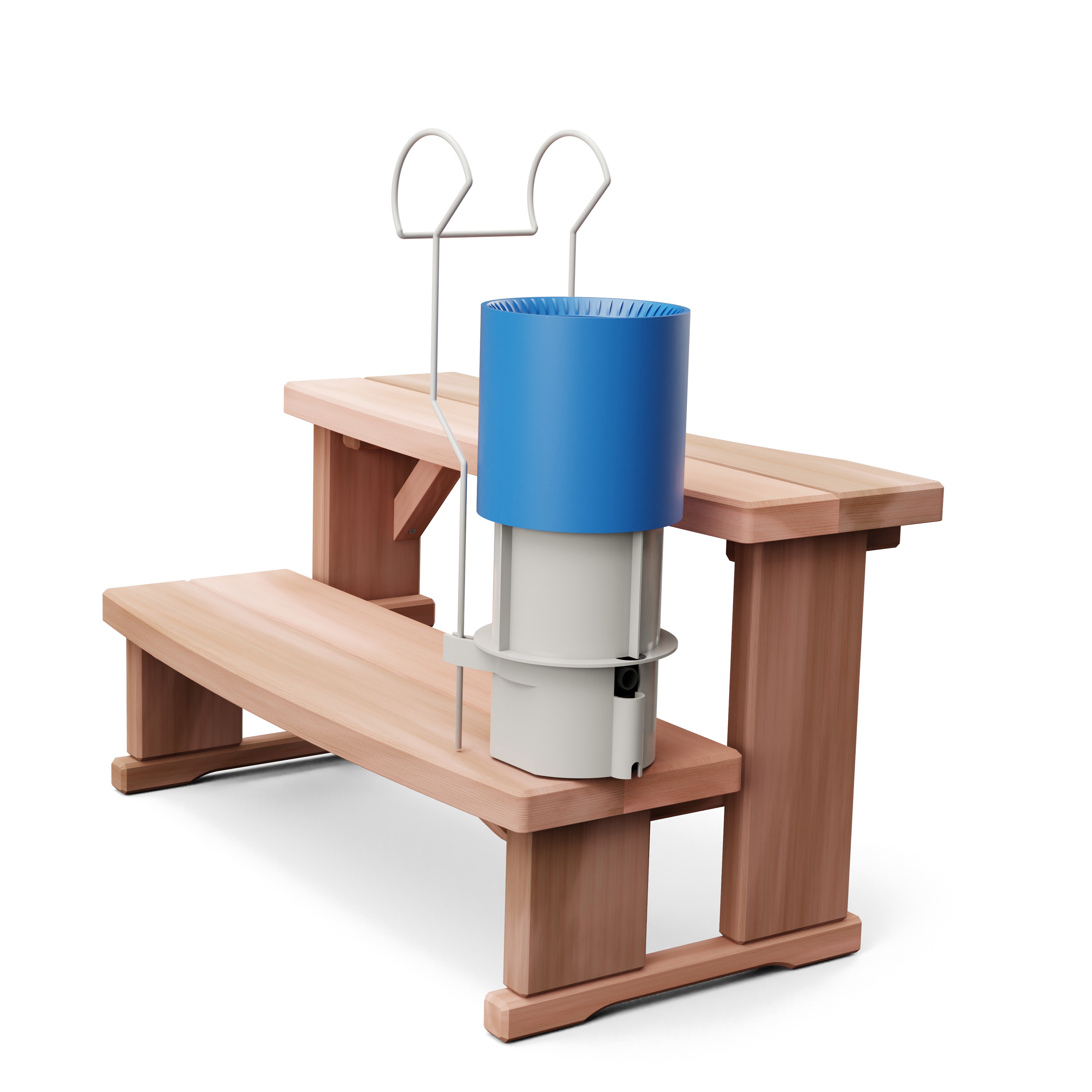 Accessories

How does a Nordic wooden spa work?
A Nordic wooden spa, also called a Scandinavian spa or Nordic hot tub, is an outdoor bath designed for relaxation. Composed of a wooden basin filled with heated water, in which you immerse yourself to enjoy a moment of relaxation in the open air.
From one model to another, the real variation is mainly in the way the water is heated, with each system having its own specifics.
The Nordic spa heated by wood fire
This is the most traditional format. A stove immersed directly in the tank or positioned outside and connected by pipes, which is fed with logs. The water warms up through natural circulation (thermal convection), without an electric pump. This system, called thermosiphon, requires no electrical connection: hot water rises and cold water descends, creating automatic circulation.
In return, you need to plan the heating time in advance, generally 1.5 to 3 hours depending on the size of the bath, the outside temperature and the quality of the wood.
The electric Nordic spa
An electric heater (often 3 kW) maintains the water at a constant temperature permanently, coupled with a filtration pump and hydromassage jets. The spa is available at any time, without prior preparation. It is the most practical format for daily or semi-daily use.
The hybrid Nordic spa
Some models combine both systems: a wood-fired stove for the ritual and rapid temperature rise, plus an electric heater to maintain warmth between uses. It is often the best compromise between authenticity and comfort.
How does the jet system work?
On models with hydromassage, a pump circulates water through nozzles integrated into the tank. The jets are adjustable in power and direction, and target specific areas of the body. Depending on the models, there are 12 to 16 jets, interior LED lighting and control via keyboard or smartphone. Models that are purely wood-fired do not have jets because relaxation comes from the warmth of the water rather than massage.
What temperature for a wooden spa?
This is one of the most frequently asked questions, and the answer is quite simple.
The ideal temperature for a wooden spa is between 37°C and 40°C. This is the range that allows you to relax muscles, improve blood circulation and fully enjoy immersion, without risk of overheating for a healthy adult.
Beyond 40°C, prolonged immersion becomes uncomfortable and inadvisable, particularly for vulnerable people.
On an electric or hybrid model, the temperature is managed automatically by a thermostat. Whereas on a wood-fired stove model, it is up to you to control it by adjusting the intensity of the fire and, if necessary, by adding a little cold water.
How long does a session last?
Most users stay between 15 and 30 minutes per session. Beyond that, the heat can become heavy. If you practice hot/cold alternation, a session breaks down into cycles of 10 to 20 minutes in the heat, followed by 1 to 3 minutes in cold water or fresh air, repeated 2 to 3 times
How to choose an outdoor wooden spa: the 6 key criteria
1. The heating method
This is the first decision. Ask yourself the question of your actual use:
If you like the ritual, spontaneity is not your priority, and you have the space to store wood: the wood-fired stove is the most authentic format.
If you want the spa to be available at any time, without preparation: the electric model is essential. Temperature rise is automated, but electrical consumption should be anticipated in the operating budget.
If you want both: the hybrid model is often a relevant option, especially for families.
2. Size and capacity
Wooden spas come in models from 2-person (150 cm diameter) to 10-person (240 cm). For a family of 4 to 5 people, a diameter of 180 cm is generally the right balance. For regular use between adults, a 150 cm model may be sufficient.
Beyond capacity in persons, think about total weight: a filled tank with its users can represent more than a ton. You need stable ground (concrete slab or reinforced terrace) to accommodate it without risk.
3. The type of installation
Three formats are available on the market:
The above-ground spa is placed directly on a terrace or slab. It is the simplest and most flexible option — it requires no work and can be moved if you rearrange your outdoor space. The exterior wooden cladding can be integrated or added.
The recessed spa integrates at the level of your terrace floor. Result: an almost invisible, very elegant finish that preserves the visual continuity of the space. The machinery is hidden under the deck.
The semi-recessed spa is the compromise: the tank is partially recessed, with visible cladding above the deck. Less work than full recessing, more integration than pure above-ground.
4. Wood: solid or cladding?
This is a point often poorly explained in product sheets. Two realities coexist under the term "wooden spa":
A wood-clad spa has an acrylic or composite tank, with wooden slats placed on the outside for aesthetics. This is the most common configuration in mass distribution.
A solid wood spa has a tank whose entire structure is made of wood, with thick staves (often 38 mm) in direct contact with the water. The wood provides thermal insulation, releases its natural aromas and constitutes the structure itself.
Durability, insulation and sensory experience are notably superior in the second case. Among the most commonly used species: Red Cedar (naturally rot-resistant, highly aromatic), larch (robust, European) and heat-treated wood (heat treatment without chemical products).
At Storvatt, we work exclusively with Red Cedar Clear 2 for our entire range of outdoor wooden spas, manufactured in the French Alps since 1997.
5. Origin and manufacturing
The question of French or European manufacturing is increasingly being asked, and it is legitimate. It has concrete implications: quality of wood used, manufacturing control, availability of after-sales service, delivery times for spare parts.
A spa manufactured in France or in a country with a tradition of woodworking (Scandinavian countries, Baltic countries) will generally offer better long-term guarantees than an imported model without traceability. Check the origin of the wood and the presence of accessible after-sales service.
6. Equipment and options
Beyond the choice of basic model, several options can make a real difference:
The insulating cover is essential: it limits heat loss between sessions and significantly reduces electrical consumption or the need for wood.
The filtration system (cartridge or sand) determines the frequency of draining and water quality. With effective filtration, water can be kept for 2 to 3 months before draining.
Color-changing LED lighting is often included on models with hydromassage, transforming comfort during evening use.
Remote control via smartphone, available on certain models, allows you to start heating before you arrive home.
Nordic wooden spa: what price should you expect?
The price of a wooden spa varies considerably depending on the criteria seen above. Here is a realistic price range for the French market in 2025-2026:
Type of wooden spa | Indicative price range |
|---|---|
Entry-level Nordic wooden spa (wood stove, basic wood) | 3,000 – 6,000 € |
Wooden spa with hydromassage, above-ground, solid wood tank | 8,000 – 14,000 € |
Recessed or semi-recessed wooden spa, high-end | 14,000 – 25,000 € |
Wooden spa French manufacturing, Red Cedar, manufacturer warranty | from 12,800 € |
These prices are exclusive of installation. Plan an additional budget for ground preparation, electrical connection (must be entrusted to a qualified electrician, with 30 mA differential breaker) and delivery, which may vary depending on accessibility.
The annual operating budget (maintenance products, filtration, energy) is generally between 200 and 500 € for regular use in an electric model, and considerably less for a wood-fired stove model.
Wooden spa: maintenance in practice
The maintenance of a well-designed wooden spa is less constraining than often imagined.
Each week, check the pH of the water (ideally between 7.2 and 7.6), add bromine or chlorine tablets according to the chosen treatment, and rinse the filter cartridge.
Every 2 to 3 months, for regular private use, drain the tank, rinse the inside (a quick sponge wipe is enough on a solid wood tank) and refill.
On wood-fired stove models, remember to empty the ash drawer before each use and only use dry wood (moisture content below 20%) for rapid temperature rise and without excessive smoke.
The exterior wood (the tank and cladding) requires no treatment for naturally rot-resistant species like Red Cedar. It will gradually patina to a silvery grey color, without loss of property. If you wish to preserve the initial golden tint, a protective oil can be applied once or twice a year to the external face only. Never on the inside, to avoid blocking the natural exchanges of the wood with water.
A wooden spa project?
Our team advises you to choose the model suited to your terrace and your needs. You can also come discover our models at our Megève showroom.
Frequently Asked Questions About Wooden Spas
Still hesitant before taking the plunge? Here are the answers to the questions we are asked most often.
Do you need a building permit for a wooden hot tub?
Generally, no. A hot tub placed on a terrace or on the ground does not require a building permit. Specific rules may apply if you build a shelter around it, or depending on your local urban planning regulations.
Is a rigid wooden hot tub more durable than an inflatable hot tub?
Yes. An inflatable hot tub is temporary equipment with poor insulation, and its lifespan is 3 to 5 years under the best conditions. A rigid solid wood hot tub, when well maintained, can last several decades.
What is the difference between a wooden spa and a Nordic bath?
The wooden spa with hydromassage is equipped with jets and electric filtration, and the water is always at a good temperature. The traditional Nordic bath is heated by a wood fire, without jets, with a preparation ritual that is part of the experience. Both can be made of solid Red Cedar and can be used outdoors year-round. The choice depends on your priority: immediate comfort or sensory experience.
Does a Red Cedar spa require wood maintenance?
No, since Red Cedar is naturally rot-resistant, it requires no treatment. Over time it takes on a silvery gray hue, without losing its properties. A protective oil, applied to the external surface only, allows you to maintain the original golden color.