 Exclusives


 Wooden spas

 Nordic baths



 Wooden saunas
 Douche en bois
 Accessories
Which heating should you choose for your Nordic bath?
Wood, electric, hybrid or heat pump: the Storvatt guide to choosing the right heating for your Nordic bath based on your use and budget.
Wood, electric, hybrid or heat pump: which heating should you choose for your Nordic bath?
It's the first question we're asked at our Megève showroom: "And how do I heat the water — which one should I pick?" Behind that simple question lies the true heart of your future Nordic bath. The heating method shapes your evening ritual, how long you'll wait before slipping in, what you'll pay each month, and even where you'll place your bath in the garden.
At Storvatt, we craft our Nordic baths from solid Red Cedar in the French Alps, and we offer them with four heating options: the wood-fired stove, electric, hybrid and — the newcomer that changes a great deal — the heat pump. Here's how to see clearly.
In short. The wood-fired stove is made for the ritual of the fire and on-demand use. Electric offers simplicity and water that's always ready. Hybrid combines the pleasure of wood with the flexibility of electric. The heat pump is the most economical option to run when keeping water warm all year round.
The wood-fired stove: the ritual in its purest form
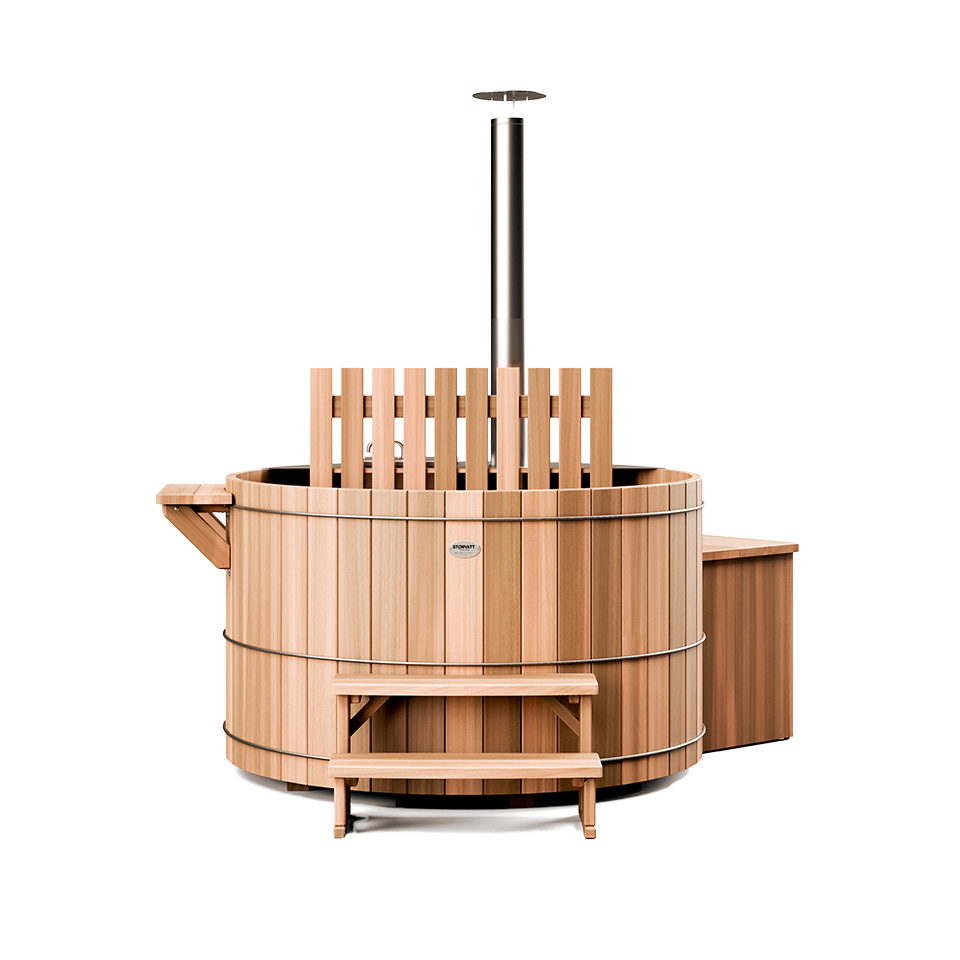
This is the original heating of the Nordic bath, and for many its very soul. The Storvatt aluminium stove — a highly conductive material — heats water efficiently: expect roughly one and a half to three hours to bring cold water up to 39 °C, depending on how you set the air intake.
Wood appeals first through its gesture: you light the fire, listen to the crackle, watch the smoke rise as the water gently warms. That preparation time is already part of the relaxation.
Practically, the wood stove heats on demand: you only heat when you need to, which makes it economical for occasional use. Upkeep is simple: cartridge filtration, weekly cleaning, bromine tablets, pH check, and a full drain roughly every three months.
Who is it for? Lovers of the ritual, second homes, gardens without a dedicated electrical connection, and those who bathe a few times a month.
Electric: everyday simplicity
Electric heating answers a different desire: to think about nothing. The water is heated and held at temperature, with continuous automatic filtration that keeps it crystal clear. You lift the cover, you step in, it's ready.
It's the option that asks the least of you: permanent filtration reduces manual upkeep and hot water stays available at all times. In return, keeping water warm year-round draws electricity — a trade-off well worth it if you bathe often.
Who is it for? Main residences, households that use their bath regularly, and anyone who wants zero preparation.
Hybrid: the best of both worlds
Hybrid is our best seller, and that's no accident. It pairs the wood-fired stove with an electric heater on a single bath: the pleasure of the fire whenever you like, the flexibility of electric the rest of the time.
In practice, electric holds the water at the right temperature in the background, while wood gives a rapid rise in heat and the atmosphere of the ritual on the evenings you want it. It's also a safety net: if you haven't time to light a fire, electric takes over.
Who is it for? Those who don't want to choose. Families with varied habits, and lovers of the wood ritual who also value bathing without preparation.
The heat pump: the most economical option to run
This is the solution that moves the Nordic bath towards everyday comfort. A heat pump draws calories from the outside air to warm the water, consuming markedly less energy than a conventional electric element for an equivalent result.
The benefit is twofold: you keep the water warm all year round, winter and summer alike, without the daily gesture of the fire, and you do so while keeping consumption in check, since the pump returns several times the energy it uses.
At Storvatt, the heat pump now equips a large part of the range: the electric Nordic bath with heat pump, the wood-stove bath paired with a heat pump, and our above-ground, built-in and semi-built-in wooden spas.
Read more: discover how much a bath or spa with a heat pump really consumes.
Who is it for? Main residences, frequent or daily use, those who want permanently warm water without a soaring bill, and hospitality professionals mindful of running costs.
How to make your choice
How often will you bathe?
A few times a month points towards wood, which heats on demand. Several times a week or every day justifies keeping the water warm: electric or, better still, the heat pump.
Main or second home?
A bath that stays empty for several weeks suits wood perfectly. A bath you want ready when you come home from work calls for the heat pump.
The ritual or the availability?
If lighting the fire is part of the pleasure, wood or hybrid are for you. If you want above all to slip in without a second thought, electric and the heat pump fill that role.
There's no wrong choice, only the one that matches how you live. And whatever the heating, you'll find the same solid Red Cedar bath, the same depth that gives that weightless sensation, and the same five-year guarantee on the wood.
Want to compare the models for real? Our advisers help you choose the heating best suited to your garden and lifestyle. Ask for advice or explore our range of Nordic baths.
Frequently asked questions
Does the heat pump really work in winter?
Yes. A suitable heat pump keeps drawing calories from the air even in cold weather, which lets it maintain water temperature all year round. Winter use is precisely where it makes the most sense.
Can a wood-heated bath be converted to a heat pump later?
The heating choice is made when the bath is designed. It's best to anticipate your real use from the moment of purchase; our showroom team will help you think this through before you order.
Which heating uses the least energy?
For occasional use, wood, because you only heat on demand. For frequent use with the water kept warm, the heat pump is the most economical thanks to its efficiency.
Does wood require a lot of upkeep?
Simple weekly maintenance (cartridge, bromine, pH) and a full drain roughly every three months. Nothing daunting — and it's part of the relationship with the bath that many people cherish.
Storvatt — The still journey. Nordic baths, saunas and wooden spas designed and made in the French Alps since 1997.